IntoRobotiks
Issue #2

Everything interesting worth knowing in robotics this week.

what's worth knowing... #2
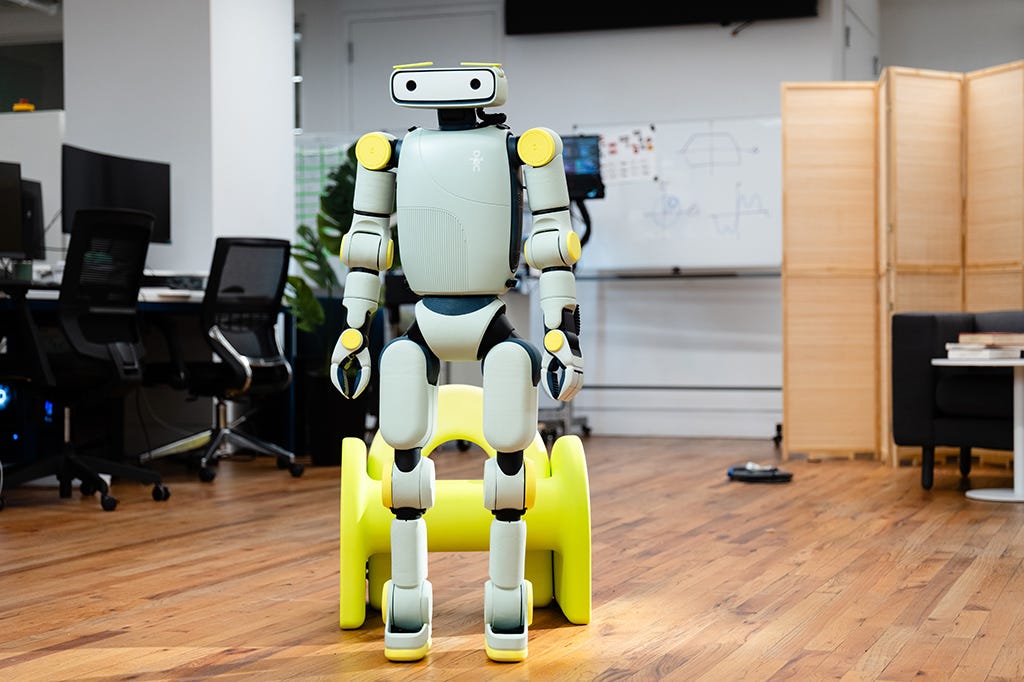
Amazon Acquires Fauna Robotics, to develop humain robots!

Amazon Acquires Fauna Robotics, to develop humain robots!

Amazon has acquired Fauna Robotics, a New York-based startup that debuted its humanoid robot Sprout in January. The 3.5-foot-tall robot is built for friendly social interactions rather than industrial tasks, capable of dancing, grabbing small objects, and walking around on its own. Priced at $50,000, Sprout is sold primarily as a software developer platform to academic and corporate research labs, with early customers including Disney.

The deal adds a consumer-facing robotics dimension to Amazon’s already extensive automation efforts, which include over one million robots deployed across its warehouse operations. Fauna’s team will continue operating in New York under the name “Fauna Robotics, an Amazon company,” with a focus on finding new ways to improve customer experiences. Financial details of the acquisition were not disclosed.

The move comes after Amazon’s attempt to acquire robot vacuum maker iRobot fell through in 2024 due to regulatory pushback in both Europe and the United States. With Alexa already embedded in millions of homes, bringing Sprout into the fold could signal a renewed push into consumer robotics, this time through a more socially oriented approach rather than household utility.
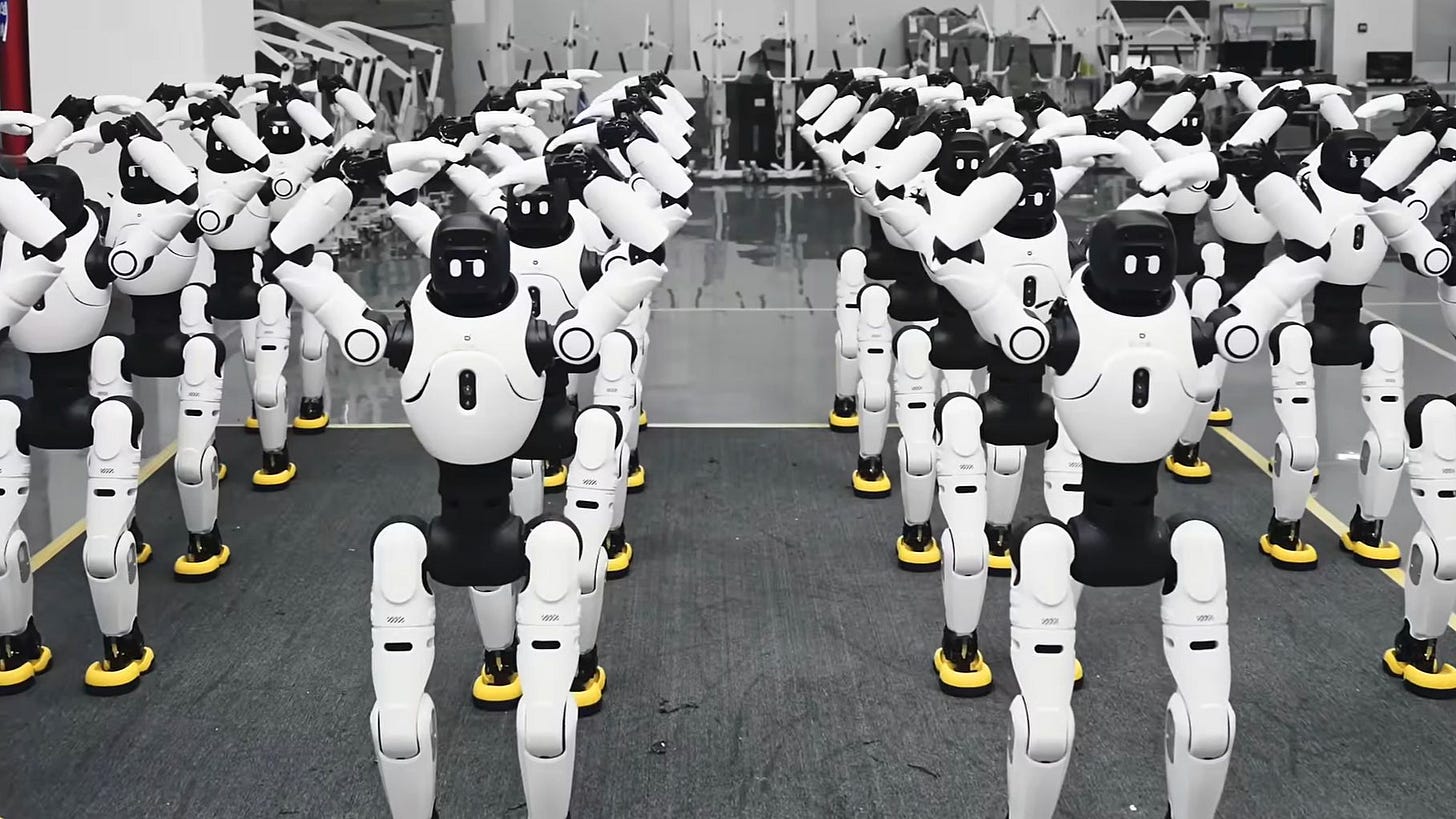
AGIBOT introduces New Generation of AI Robots, Models & physical Robotic Components!

AGIBOT introduces New Generation of AI Robots, Models & physical Robotic Components!

AGIBOT used its 2026 Partner Conference to introduce a new generation of embodied AI products built around its “One Robotic Body, Three Intelligences” full-stack architecture. The lineup includes four new robotic platforms and several AI models aimed at moving embodied intelligence from demonstrations into practical deployment across industrial, commercial, and service environments. Co-founder and CTO Peng Zhihui framed the direction as shifting from showcasing capabilities to delivering measurable outcomes, with robots integrating into real human workflows rather than operating as lab curiosities.

The hardware announcements cover a broad range of use cases. The AGIBOT A3 is a 173 cm humanoid weighing 55 kg, designed for entertainment and customer engagement with features like centimeter-level swarm positioning for synchronized 100-robot performances and a 10-second battery swap. The G2 Air is a lightweight single-arm mobile manipulator built for retail, hospitality, and logistics, with the added capability of capturing training data in real time during task execution. AGIBOT also introduced the OmniHand 3 Ultra-T, a tendon-driven dexterous hand with 22 plus 3 degrees of freedom and full-hand 3D tactile sensing, along with the D2 Max, described as the first all-terrain Level 3 autonomous quadruped robot suited for patrol, inspection, and rescue scenarios.

Beyond robots, AGIBOT unveiled MEgo, a body-free data collection system that lets human operators gather multimodal training data across real-world settings without needing robotic hardware. The system combines a gripper, a head-mounted capture unit, and a processing engine to produce synchronized vision, motion, and tactile datasets ready for model training. Together, the announcements point to AGIBOT building out both the physical platforms and the data infrastructure needed to scale embodied AI, positioning the company for the broader industrial rollout that many in the sector expect to accelerate through 2026.
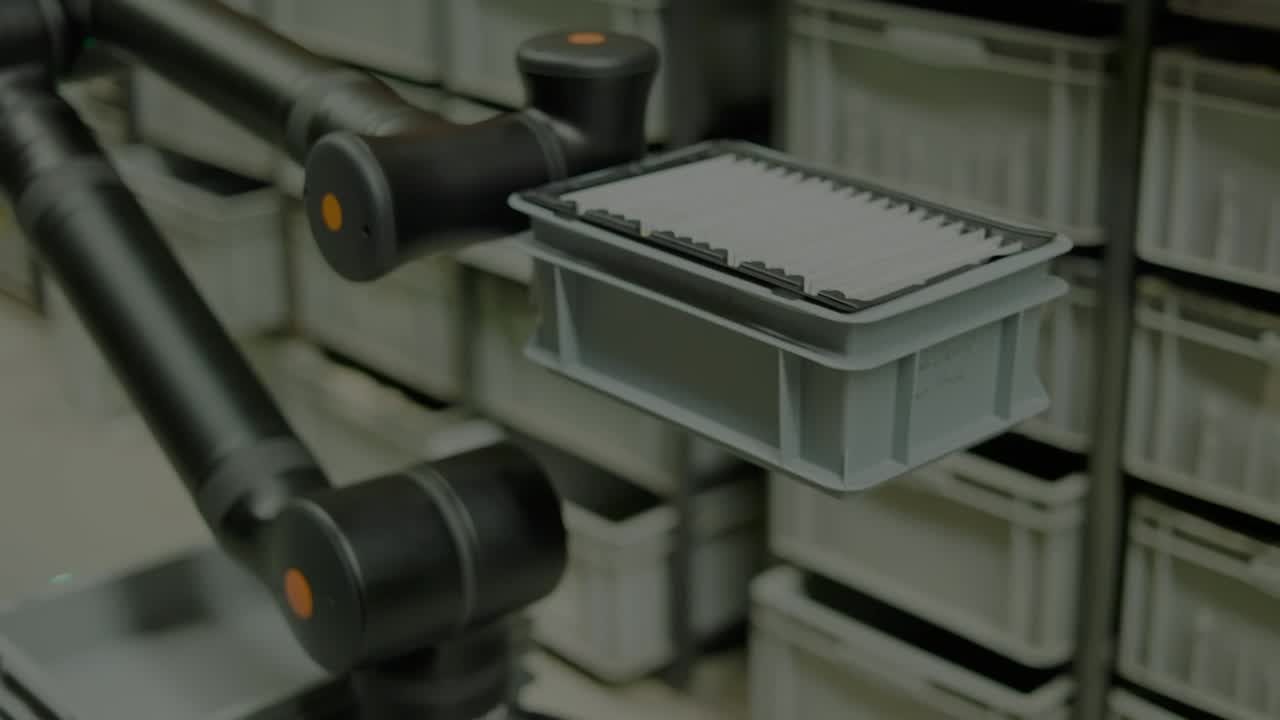
Kassow targets the industrial cobot middle ground with two new high-payload models!

Kassow targets the industrial cobot middle ground with two new high-payload models!

Kassow Robots, the Copenhagen-based arm of Bosch Rexroth, has rolled out two new seven-axis collaborative robots, the KR 1824 and KR 1240, aimed at higher-payload tasks that have traditionally sat outside the cobot category. The models are being shown at Hannover Messe as part of Bosch Rexroth’s CU.BE digital showcase. What sets Kassow apart in a crowded cobot market is its seven-axis configuration, which gives the arms more reach and maneuverability in tight spaces than the standard six-axis designs used by most competitors. With the new models, the company is targeting manufacturers looking to automate palletizing, machine tending, and heavier material handling without committing to a full industrial robot cell.

The engineering updates on these units are more substantial than a typical incremental release. Joint torque has gone up by 50 percent, wrist speeds by over 20 percent, and mechanical stiffness by 40 percent, which together translate into steadier handling of heavier loads and shorter cycle times. Both models come with the option of an EDGE integrated controller, a design choice worth paying attention to because it removes the separate control cabinet that usually ships with cobots, making mobile and modular deployments far more practical. For factories experimenting with reconfigurable production lines or shifting cobots between stations, that footprint reduction is a meaningful operational advantage.

The broader context here is the blurring line between collaborative and industrial robotics. Cobots have historically been capped at lighter payloads and slower speeds to keep them safe around humans, but market demand has pushed manufacturers to extend what cobots can do without crossing into caged industrial territory. Christoph Rieger, Kassow’s Chief Sales Officer, positioned the new models as filling exactly that middle ground. Whether the category holds up under that pressure is still an open question, since heavier payloads introduce safety tradeoffs that the industry is still working through. For now, Kassow’s release gives Bosch Rexroth a stronger hand in a segment where Universal Robots, Fanuc, and several Chinese players are all competing for the same factory floor.

Locus Array named MHI Best New Innovation finalist at MODEX 2026!

Locus Array named MHI Best New Innovation finalist at MODEX 2026!

Locus Robotics has been named one of three finalists for the MHI Best New Innovation Award at MODEX 2026, one of the largest material handling and supply chain events in the industry. The recognition came for Locus Array, the company’s fully autonomous warehouse robot, which was selected from more than 200 submissions by an independent panel of judges.

Until now, Locus has built its reputation on the traditional autonomous mobile robot model, where robots navigate to human workers who then pick items off the shelf. Array changes that dynamic by handling picking, putaway, induction, drop-off, slotting, and replenishment in a single autonomous system, which the company says reduces manual labor in warehouse fulfillment workflows by around 90 percent. The system has already begun rolling out with select partners in North America, with DHL being one of the more notable early deployments.

The thinking behind Array places it in an interesting middle ground in the current robotics landscape. While much of the industry is focused on humanoid and wheeled humanoid form factors as the next step in warehouse automation, Array takes a different route by combining the mobility of an AMR with onboard manipulation capabilities. Locus refers to the approach as “robots-to-goods” or R2G, where the robot travels directly to inventory and handles the entire pick operation without routing items through fixed infrastructure. The system borrows some conceptual elements from automated storage and retrieval setups like AutoStore, but is built to work in existing warehouses rather than requiring a ground-up redesign of the facility. CEO Rick Faulk carried a sustained thinking that automating older warehouses with existing infrastructure is “really, really hard to do,” positioning Array as a solution purpose-built for brownfield environments.

Early deployments are running with safety fencing as a precaution, reflecting Locus’s cautious approach to introducing a heavier, more autonomous robot into live environments. Array carries a larger safety zone than the company’s Origin AMRs, along with additional sensors and specialized braking systems to accommodate its weight. The broader context for this launch is a warehouse labor market under significant strain, with some accounts seeing double-digit weekly turnover, which has made fully automated picking systems increasingly attractive to operators. Locus is planning expansion into Europe and APAC regions, though specific timelines have not been disclosed. The company’s business mix has also shifted over recent years, with roughly a quarter of new deployments now going into greenfield facilities rather than the retrofit installations that built its early reputation.

Over 70 humanoid robots ran a 21km night rehearsal in Beijing ahead of the official race!

Over 70 humanoid robots ran a 21km night rehearsal in Beijing ahead of the official race!

There’s something interesting that happened this week. Beijing hosted a full-scale test run of the 2026 humanoid robot half-marathon in the E-Town Economic and Technological Development Area, conducted from the evening of April 11 into the early morning of April 12, ahead of the official race scheduled for April 19. More than 70 teams took part in the rehearsal, including four international entries, with both autonomous navigation and remote-controlled robots running the course overnight. The test simulated every major aspect of the actual competition, from track navigation and event scheduling to equipment coordination and emergency response protocols.

This is the second edition of what is billed as the world’s first humanoid robot marathon, and participation has scaled dramatically. Over 100 teams are competing this year, a nearly fivefold jump from last year’s lineup. The race is split into two categories, autonomous navigation and remote control, with autonomous entries making up close to 40 percent of the field. Teams ran the full 21.0975 kilometer route under official race timing, covering both urban roads and ecological park terrain, which tested how well the robots handle varied surfaces and changing environmental conditions over long distances.

The autonomous navigation category carries the real technical weight. Robots have to perceive and react to dynamic environments in real time, which puts significant demand on onboard computation. Long-distance running also stresses battery life and energy management, while maintaining dynamic balance requires millisecond-level posture adjustments to avoid falls. Organizers have tightened the regulations this year as well, with stricter rules around human intervention, clearer scoring and penalty systems, and more robust safety protocols. Short-distance speeds have improved noticeably compared to last year, and some teams are expected to finish with times approaching elite human runners. Beyond the spectacle, the event serves as a useful stress test for how far humanoid hardware and autonomy have actually progressed toward real-world deployment.

TL;DR

  1. Amazon acquired Fauna Robotics, the New York startup behind a $50,000 social humanoid robot called Sprout, signaling a renewed push into consumer-facing robotics after the iRobot deal collapsed in 2024.

  2. AGIBOT launched four new robotic platforms at its 2026 Partner Conference, including the A3 humanoid, G2 Air manipulator, OmniHand 3 Ultra-T, and D2 Max quadruped, along with MEgo, a body-free data collection system for training physical AI.

  3. Kassow Robots introduced the seven-axis KR 1824 and KR 1240 cobots with 50 percent more joint torque and an EDGE integrated controller, targeting the middle ground between traditional cobots and full industrial robots.

  4. Locus Robotics was named a finalist for the MHI Best New Innovation Award at MODEX 2026 for Locus Array, a fully autonomous warehouse robot that handles picking, putaway, and slotting, reducing manual fulfillment labor by around 90 percent.

  5. Beijing hosted a full-scale overnight rehearsal for the 2026 humanoid robot half-marathon with over 70 teams running the 21 kilometer course, ahead of the official race on April 19 that will feature more than 100 teams competing.