
IntoRobotiks
Issue #1

Moments of this week in Robotics / AI / Agentic Payments

China based humanoid Robotic giant sees a 23 fold sales jump, as 2025 revenue unfolds!
China based humanoid Robotic giant sees a 23 fold sales jump, as 2025 revenue unfolds!

China based humanoid Robotic giant sees a 23 fold sales jump, as 2025 revenue unfolds!

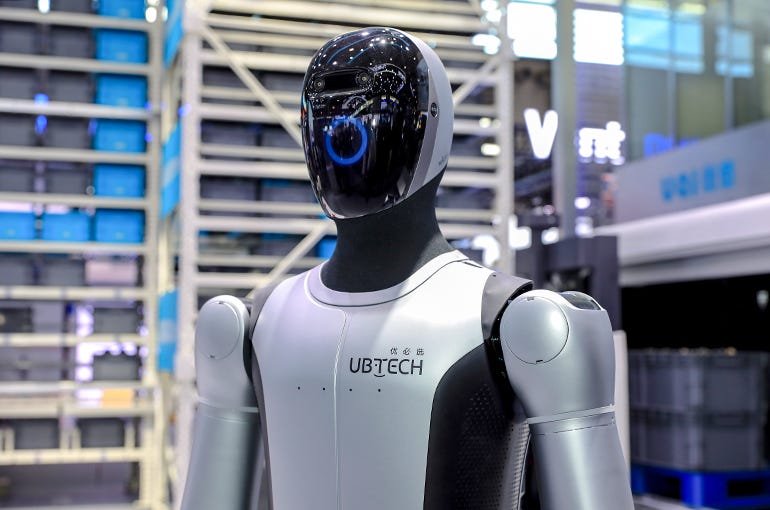
UBTech, a Shenzhen-based robotics company listed in Hong Kong, saw its stock price surge over 14 percent after reporting strong 2025 earnings fueled by a remarkable expansion in humanoid robot sales. The company’s revenue from full-size humanoid robots and associated services skyrocketed to 820 million yuan, up from just 35.6 million yuan the year before, making it the firm’s biggest revenue contributor.

This growth was underpinned by a leap from selling only three units in 2024 to over a thousand in 2025, helping total company revenue rise 53 percent to reach 2 billion yuan. UBTech credited the momentum to the widening real-world deployment of its technology across various commercial use cases.

The company’s performance highlights the broader acceleration taking place in China’s humanoid robotics sector, which is riding a global wave of interest in combining AI with physical machines to create what the industry calls embodied intelligence.
A AI powered machine can sort clothes faster than any human being!

A AI powered machine can sort clothes faster than any human being!

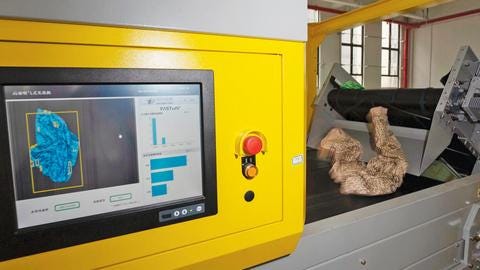
A Chinese environmental firm called Shanghesheng, based in an industrial park in Zhangjiagang, is leveraging AI-powered sorting technology to transform how used textiles are processed. The company uses a machine called Fastsort-Textile, developed by recycling tech firm DataBeyond, which can analyze up to two tons of clothing per hour, a task that would otherwise require two workers roughly two days to complete with less precision.

Company officials highlighted that the machine excels at identifying fabric compositions with a level of accuracy that manual sorting simply cannot match. Since adopting this technology, the share of textiles deemed non-recyclable has dropped from around 50 percent to 30 percent, significantly improving recovery rates. The system underscores how AI is increasingly being applied in China's recycling industry to cut costs, save time, and reduce waste more effectively.
BrainOS Clean 2.0, a new

BrainOS Clean 2.0, a new

Subscribe now

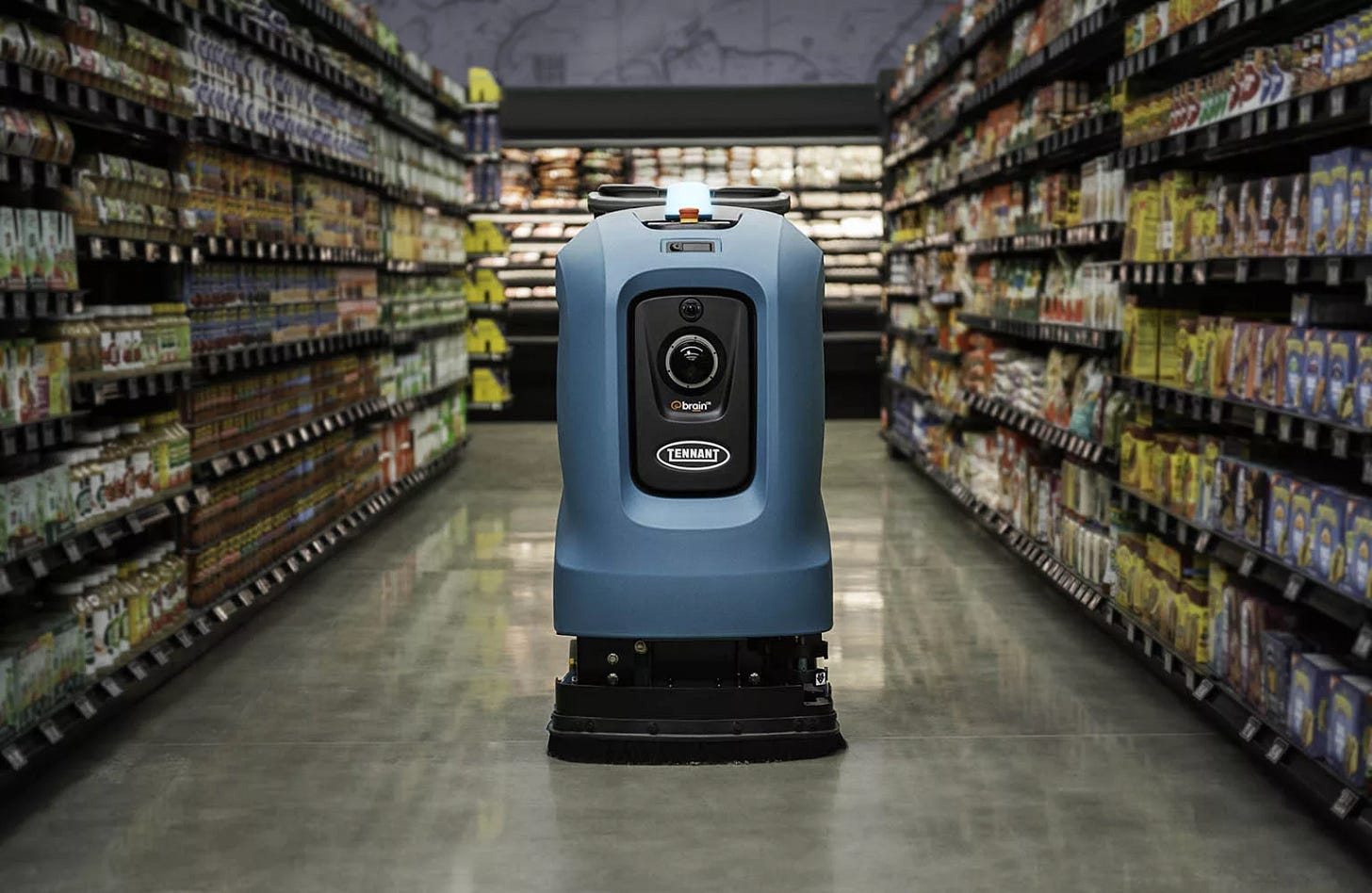
Brain Corp, a company specializing in real-world AI applications, has launched BrainOS Clean 2.0, a significant software upgrade for Tennant Company’s robotic floor cleaners. The update introduces a new feature called SelfPath AI, which allows robots to autonomously generate and adjust their own cleaning routes without requiring manual training. This marks a step forward in adaptive autonomy for commercial cleaning robots operating in dynamic environments.

Early deployment results show meaningful operational gains, including a 22 percent increase in floor coverage, a 55 percent improvement in autonomous operation, and deployments that are more than three times faster due to the elimination of manual route programming. These improvements reflect the system’s ability to assess its surroundings in real time and reduce the need for human intervention.

Beyond route planning, BrainOS Clean 2.0 brings enhanced visual perception, dynamic obstacle rerouting, and workflow-aware features such as automatic charging and schedule-based operation. Brain Corp CEO David Pinn emphasized that the update delivers immediate commercial value by speeding up deployment, improving cleaning performance, and helping partners address real-world operational challenges at scale.

Unitree has just filed for a $610-million IPO on the Shanghai Stock Exchange!

Unitree has just filed for a $610-million IPO on the Shanghai Stock Exchange!

Unitree Robotics, a Hangzhou-based company recognized as the world’s largest humanoid robot seller, has filed for an initial public offering on the Shanghai Stock Exchange, aiming to raise approximately 4.2 billion yuan, or around $610 million. The funds are expected to go toward expanding its research and development efforts as well as boosting manufacturing capacity. The company gained widespread attention in early 2025 after its humanoid robots performed a dance routine on one of China’s most popular television programs.

The IPO is arriving at a time of growing competition in the humanoid robotics space. Elon Musk’s Tesla has announced plans to begin retail sales of its Optimus robot by late 2027, and China alone is home to over 100 companies working on humanoid robots. Analysts expect a wave of consolidation in the sector, with the number of players likely shrinking to a few dozen as early movers like Unitree go public.

Industry observers see Unitree’s listing as a key test of investor confidence in the commercial viability of humanoid robots. Ethan Qi of Counterpoint Research noted that the IPO will serve as a barometer for how the market values this emerging technology. With a detailed 363-page prospectus now available, the listing is expected to offer deeper insight into the company’s financials and growth trajectory beyond the public hype surrounding the industry.

CDP announces a new pricing model for AI Compute Requests through x402 protocol!

CDP announces a new pricing model for AI Compute Requests through x402 protocol!

Coinbase has rolled out a significant upgrade to its x402 protocol by introducing a new pricing model called “Upto,” which enables usage-based payments for AI compute services. Previously, the protocol only supported fixed-price transactions, which worked well for straightforward tasks but created inefficiencies when costs varied depending on factors like token count, processing time, or query complexity. The new scheme allows sellers to set maximum prices while charging buyers only for the actual resources consumed, ensuring fairer and more flexible pricing for agentic AI workloads.

The upgrade is seen as an important step in preparing infrastructure for the expected rise of agentic commerce, where AI agents autonomously transact on behalf of users. Earlier this month, Coinbase transferred ownership of the x402 protocol to the Linux Foundation, a nonprofit organization, with major tech companies including Google, Microsoft, and Amazon Web Services now holding a stake through the newly formed x402 Foundation. The protocol is built on the EVM and supports all ERC20 tokens, with fully gasless payment options available through Coinbase’s facilitator.

Despite these developments, adoption of the x402 protocol has declined sharply since peaking in November 2025, when weekly transactions reached 13.7 million. By early 2026, that figure had fallen below one million per week and continued to slide through the first quarter, dropping to roughly 112,000 transactions in the last week of March. The Upto upgrade appears aimed at reversing this trend by making the protocol more practical for a broader range of AI-driven services.

TL;DR

  1. UBTech sold over 1,000 humanoid robots in 2025 compared to just three the year before, driving a 53 percent jump in total revenue and a 14 percent stock surge.

  2. Shanghesheng is using an AI-powered machine called Fastsort-Textile to sort two tons of used clothing per hour, cutting non-recyclable textile rates from 50 percent to 30 percent.

  3. Brain Corp launched BrainOS Clean 2.0 with SelfPath AI, letting Tennant’s robotic floor cleaners autonomously plan routes, boosting coverage by 22 percent and autonomy by 55 percent.

  4. Unitree Robotics, the world’s top humanoid robot seller, filed for a $610 million IPO on the Shanghai Stock Exchange to fund R&D and scale manufacturing.

  5. Coinbase upgraded its x402 protocol with usage-based pricing for AI compute, though weekly transactions have dropped sharply from 13.7 million in November to around 112,000 by late March.