Robotera closes a $200M+ round led by SF Group as thousand-unit humanoid deliveries begin and logistics deployments scale across China
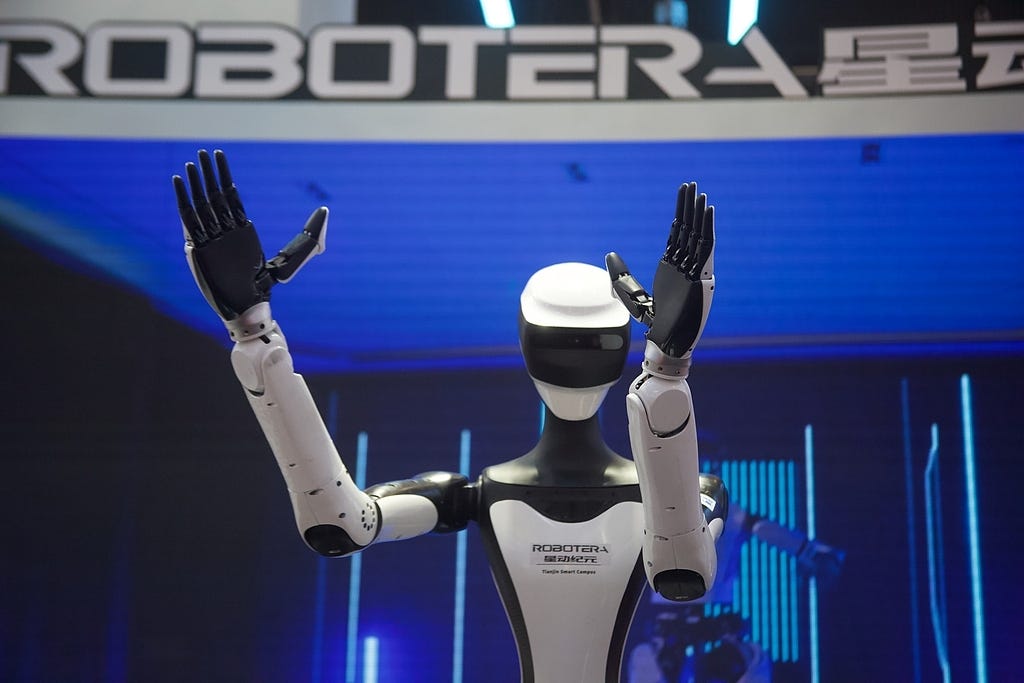
Robotera, the Beijing-based humanoid robotics company, has closed a funding round of more than $200 million led by SF Group, the Chinese logistics giant that also serves as one of its primary operational partners. The raise followed a separate $143 million strategic financing completed in March, bringing the combined total across both rounds to over $340 million in under three months. Overall investor demand exceeded the company’s original fundraising target.
The syndicate behind the round covers a wide range of capital types:
Lead investor: SF Group
Financial investors: HSG, IDG Capital, Hillhouse Investment, CICC Capital, Jingming Capital, SparkEdge Capital, Luxin Venture Capital Group, Unite Pioneers Capital, Longqi Investment
Strategic and industrial partners: KENGIC, Dongfeng Asset Investment, ICBC Capital, China Unicom affiliated funds
Existing investors increasing stakes: Tsinghua Holding Tiancheng Asset Management, Horizon Investment
What separates this round from most humanoid funding announcements is the commercial evidence sitting behind it. Robotera’s robots are currently operating across more than 10 logistics centers through partnerships with China Post and SF Group. The company said it began thousand-unit deliveries during the second quarter of 2026, with revenue growth exceeding 300 percent during the period. That puts Robotera in a small group of humanoid companies that have moved from pilot deployments into volume shipments inside live operational environments rather than controlled demos.
On the hardware side, Robotera develops more than 95 percent of its core components internally, covering:
Actuation systems
Full humanoid robot platforms
Dexterous robotic hands built on a direct-drive architecture the company says improves precision and durability for real-world manipulation tasks
The vertical integration strategy is deliberate. By controlling most of the stack in-house, Robotera avoids the supply chain dependencies that have slowed several other humanoid programs when scaling from single units to production volumes. Its hardware has also been adopted by Nvidia, Apple, and Boston Dynamics for robotics development and research, which adds third-party validation beyond the company’s own deployment claims.
Looking ahead, Robotera is expanding beyond logistics into automotive, electronics, and service-sector applications. The presence of Dongfeng Asset Investment, one of China’s largest state-owned automakers, and KENGIC, a logistics automation specialist, as strategic partners in this round signals that those expansion targets are already backed by customer-side intent rather than speculative market projections. The company said it will continue scaling real-world robotic applications across global markets, though specific international timelines were not disclosed.
WaiV Robotics launches the first fully automatic sea-based landing platform for VTOL drones, backed by $7.5 million in seed funding
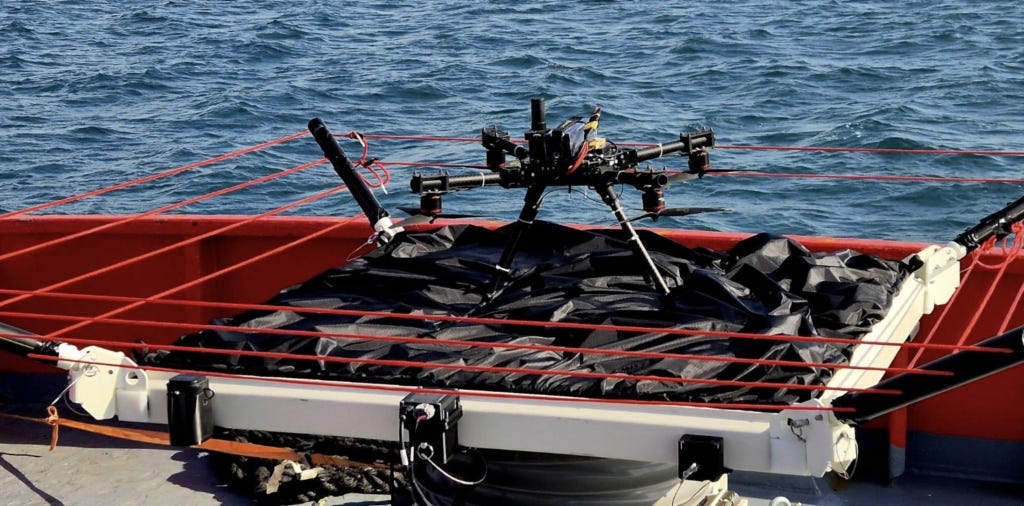
WaiV Robotics, a London-based maritime startup, introduced its gyro-stabilized drone landing and takeoff platform on May 5, 2026, alongside a $7.5 million seed round. The system is built to recover VTOL drones on vessels as small as 10 meters in open sea conditions, without requiring any hardware or software modifications to the drone itself. The platform is compatible with any VTOL configuration, including multicopter, fixed-wing, and helicopter platforms, regardless of manufacturer.
The problem WaiV is solving is specific and well-documented in the unmanned aviation space:
Vessel decks move through six degrees of freedom under wave patterns that are inherently unpredictable
Salt spray makes landing surfaces slippery on contact
Existing recovery solutions have largely been limited to calm water or controlled conditions
Smaller vessel operators have typically skipped drone deployment entirely because no reliable recovery option existed for their scale of operation
The platform addresses this through a patent-pending catch-lock-release mechanism paired with AI-driven predictive algorithms. The system takes over drone guidance via the remote control link during the landing sequence, removing the need for an expert pilot at the controls. On touchdown, the pad absorbs impact while a locking mechanism secures the UAV’s skids, preventing bounce, slide, or roll-off in rough conditions.
Current specifications cover UAVs up to 15 kilograms, with WaiV planning to extend the range in both directions:
Downward: aircraft as small as 3 kilograms
Upward: carrier-class UAVs in the 100 to 300 kilogram range
That range is deliberately broad. Offshore fleets operate across a wide variety of drone sizes depending on mission type, and a platform that only handles one weight class forces operators to maintain multiple recovery systems or accept deployment gaps. WaiV’s approach of building weight-class scalability into the roadmap from the outset suggests the company is targeting fleet-level adoption rather than individual vessel sales.
The $7.5 million seed round positions WaiV early in what remains a largely unsolved infrastructure problem for maritime drone operations. Automated recovery at sea has consistently been flagged as one of the harder open problems in unmanned aviation, not because the drone technology is insufficient, but because the receiving infrastructure has not kept pace. WaiV’s bet is that solving the recovery constraint unlocks drone deployment across offshore sectors, including energy, shipping, and defense, where vessels are already in the water but drone operations remain limited by the absence of a reliable way to get the aircraft back on board.
Hugging Face launches an agentic toolkit that lets anyone build a working app for Reachy Mini without writing a single line of code
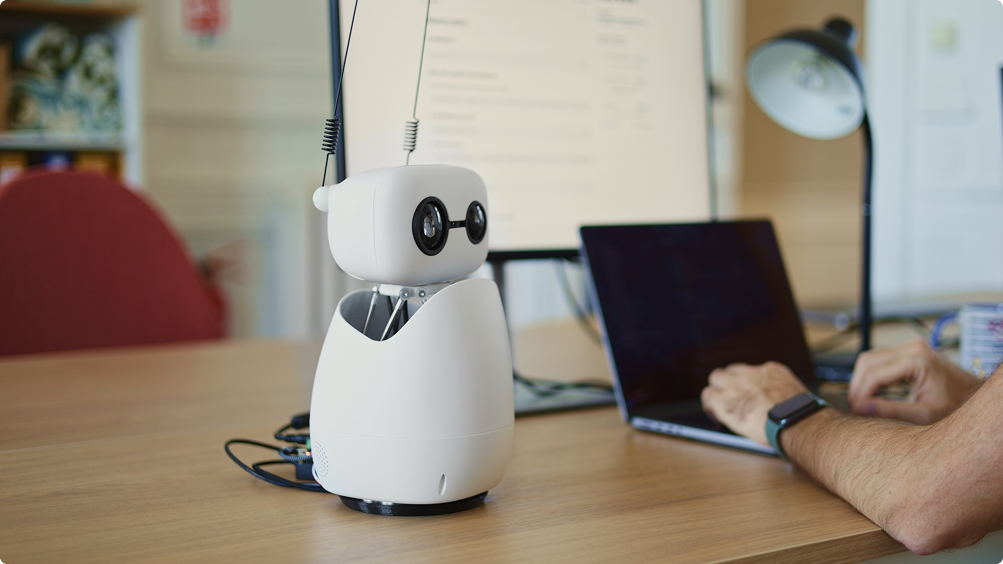
Hugging Face has launched an agentic toolkit for Reachy Mini, its open-source desktop robot, that lets anyone describe a robot behavior in plain English and have an AI agent write, test, and deploy the code to the hardware in under an hour. The company, often described as the GitHub of AI for its role as a shared platform for models, datasets, and applications, acquired Pollen Robotics, the French maker of the Reachy line, in 2024. The toolkit collapses what has historically been a three-part barrier to robotics: technical expertise, expensive hardware, and weeks of integration work. The AI agent replaces the expertise, Reachy Mini is a low-cost open-source robot anyone can purchase, and deployment is a one-click flow on a platform millions of developers already use.
The clearest illustration of what that actually means in practice comes from Joel Cohen, a 78-year-old retired marketing executive with no coding background, no robotics experience, and no developer tools beyond plain English. Cohen built a voice-controlled AI co-facilitator for the CEO peer groups he runs on Zoom. His Reachy Mini sits on his desk, wakes on command, responds with a defined personality he calls his VP of future thinking, runs four facilitation modes, pulls from a bank of over 60 questions, greets each of his 29 group members by name, and can summarize session themes before closing. He described the entire build process as describing what he needed in plain English and having Claude write the code. No SDK, no robotics background, no prior developer experience.
Apps for Reachy Mini live on the Hugging Face Hub, where they are searchable, forkable, and installable with a single click. The catalog already has more than 200 apps, ranging from a language accent tutor and a hands-free cooking assistant to a chess-playing robot that physically reacts to blunders, an anti-procrastination monitor that detects phone use and calls the user back to work, and a live Formula 1 race commentator. Every app also runs in a browser-based simulator, meaning anyone can interact with the full catalog without owning the hardware. Hugging Face co-founder Clément Delangue built an office receptionist app in under two hours as part of the launch demonstration. The broader point the company is making is less about any individual app and more about what happens when the gating that used to come from technical knowledge disappears entirely, which for robotics is a more consequential shift than it might first appear.