

Eclipse closes a $1.3 billion fund focused on physical AI, with built-in capacity to incubate startups in-house alongside external investments
Eclipse, the venture capital firm founded in 2015, has closed a $1.3 billion fund dedicated to physical AI, a category that covers startups working at the intersection of artificial intelligence and real-world production across robotics, autonomous systems, and manufacturing hardware. The structure of the fund is split deliberately:
Early-stage investments: $720 million
Later-stage deals: $591 million
What separates this fund from a standard venture vehicle is the dual mandate built into how capital will be deployed. Eclipse plans to back external founders in the conventional way, while also incubating companies internally where the firm identifies a gap in the physical AI market and assembles teams from scratch to pursue it. Partner Jiten Behl confirmed the firm is already working on a few ideas internally, with a focus on startups serving enterprise customers. This is not a common venture capital model. Most firms operate as capital allocators to founders who have already started something. Eclipse is structuring itself to also act as the originator when the opportunity calls for it.
The investment scope spans transportation, energy, infrastructure, compute, and defense, all of which sit at the same convergence point where software is becoming inseparable from physical production. The firm’s broader thesis is that AI’s next expansion is not into new digital products but into the real-world industries that have historically been hardest to disrupt, and that an ecosystem of interconnected portfolio companies across these adjacent categories will compound faster than isolated bets. The $1.3 billion fund size puts Eclipse among the largest dedicated physical AI investors in the market, at a moment where capital is flowing into the category at a pace that did not exist eighteen months ago.
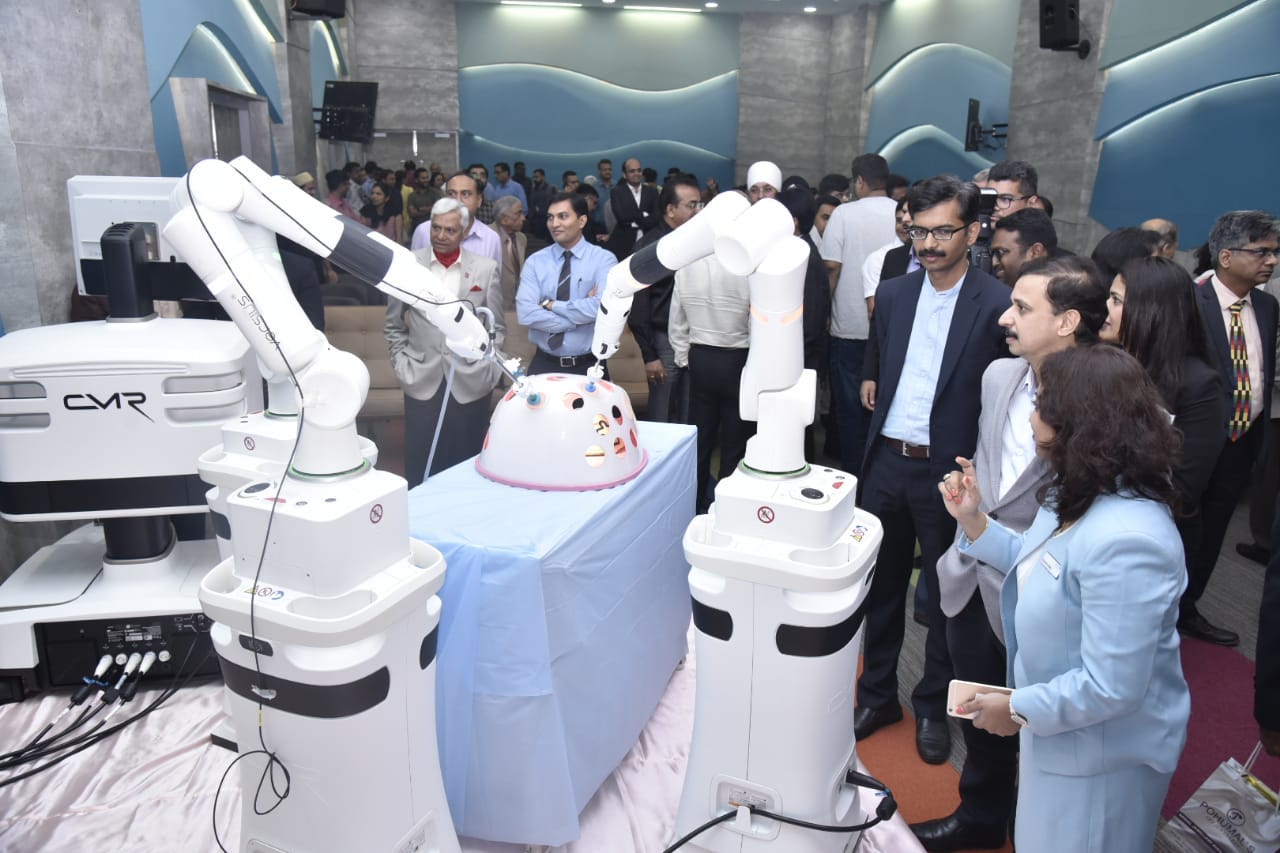
HCG raises Rs. 425 crore to expand precision medicine, robotics, and genomics infrastructure across its Indian and African oncology network
Healthcare Global Enterprises, the Bengaluru-based cancer hospital chain operating 25 facilities across India and Africa, has closed a Rs 425 crore rights issue in FY26 to fund a significant expansion across precision medicine, molecular diagnostics, genomics, and robotics. The capital will be directed across several priorities:
Capacity expansion across the existing hospital network
Clinical infrastructure upgrades
Technology investments in next-generation oncology capabilities
Selective growth opportunities and acquisitions
The broader shift driving this investment is structural. Cancer treatment is moving away from a singular focus on intervention and toward integrated pathways that include earlier diagnosis, targeted therapies based on molecular and genetic profiles, and continuous post-treatment care. Robotics fits into that pathway primarily through surgical oncology, where robotic platforms are being used to perform procedures with greater precision and shorter recovery times than traditional surgery allows. HCG founder Dr. B. S. Ajaikumar framed the company’s direction around strengthening next-generation capabilities across precision medicine, robotics, and data-driven clinical decision-making, positioning the rights issue as the financial foundation for that buildout.
On the financial side, the numbers behind the raise are worth noting:
FY26 revenue from operations: Rs 2,545 crore, up 15 percent year on year
Adjusted EBITDA: Rs 471 crore, up 19 percent
Adjusted EBITDA margin: 18.5 percent, improved from 17.8 percent in FY25
The margin expansion alongside revenue growth indicates that HCG is scaling its existing footprint more efficiently before pushing into new capital-intensive technology investments. CEO Dr. Manish Mattoo described the strategy as driving higher asset utilisation, deepening clinical excellence, and expanding the network selectively rather than aggressively. For the Indian healthcare robotics market specifically, HCG’s commitment matters because oncology is one of the fastest-growing surgical robotics segments, and a hospital chain with both scale and a focused subspecialty creates the kind of consistent procedure volume that justifies investment in robotic surgery platforms at price points that smaller standalone hospitals cannot support.
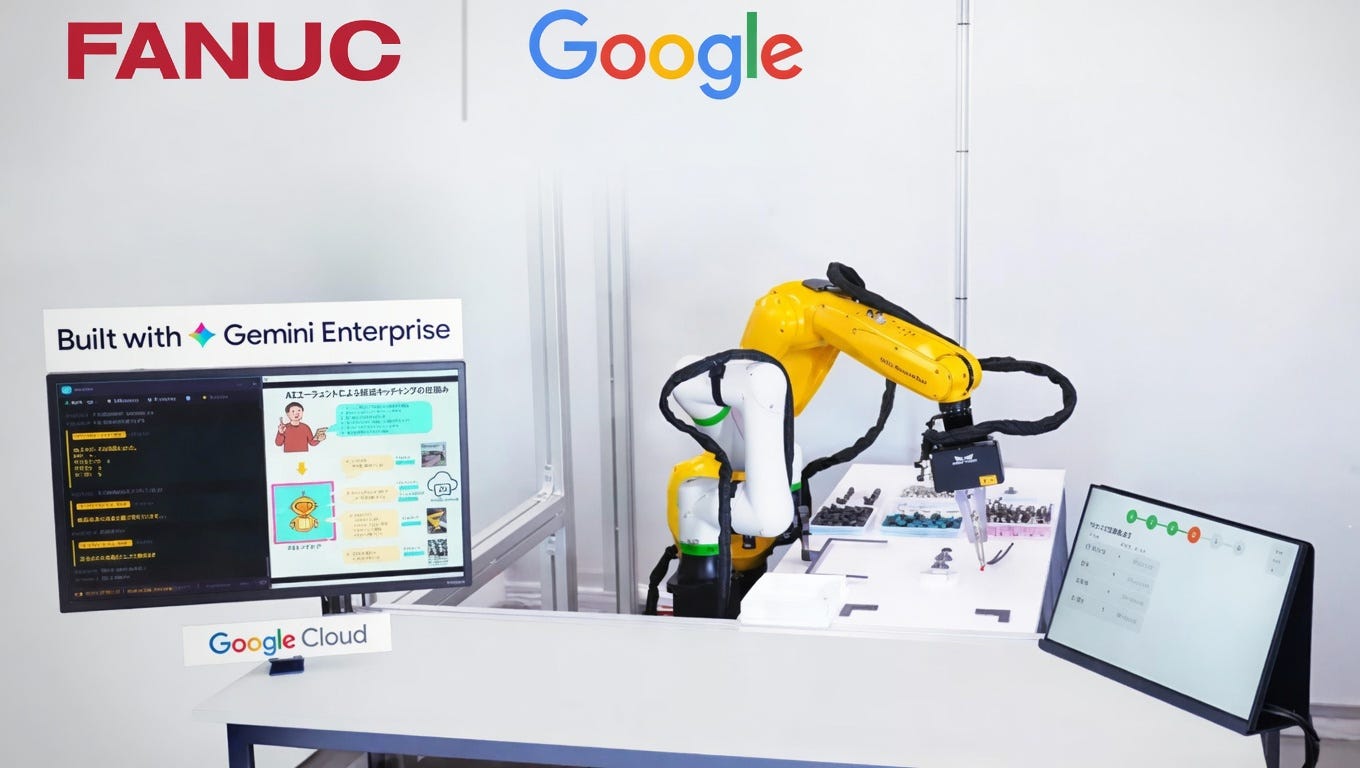
FANUC partners with Google to bring physical AI into industrial-grade robotics across its full product lineup
FANUC, one of the largest industrial robotics manufacturers in the world, has announced a strategic collaboration with Google to integrate physical AI capabilities across its robot lineup, covering everything from small 3 kilogram payload units to large industrial systems handling up to 2.3 tons, including its CRX collaborative series. The partnership is built around Google’s AI technologies being applied directly to FANUC’s existing hardware platform rather than developed in isolation.
The technical groundwork for this collaboration was already in place before the announcement. FANUC’s robots support the Robot Operating System, the industry-standard platform for robot control, through open-source ROS drivers. Google is one of the most prominent contributors and maintainers of ROS through its Intrinsic robotics AI unit, meaning both companies were already operating within the same software ecosystem. FANUC also offers compatibility with Python for AI development, high-speed communication interfaces for external robot control, and PLC integration paths that most legacy factory systems already rely on. That open platform foundation is what allows new AI capabilities to be layered into existing production lines without rebuilding the surrounding infrastructure, which is typically the slowest part of any factory automation upgrade.
The framing from FANUC America’s CEO Mike Cicco captures where the industrial robotics conversation has actually moved. Manufacturers are no longer debating whether to apply AI to production. The active question is where it gets applied first, what tasks it can reliably handle, and how it integrates with the equipment already on the floor. Physical AI, broadly defined as the combination of cognitive intelligence with physical action, has gained momentum across robotics as large language models have made it possible for machines to perceive their environment through sensors, reason about what they observe, and act on it autonomously. The bottleneck has rarely been the AI itself. It has been the gap between research-grade demonstrations and industrial-grade reliability in environments that cannot tolerate downtime, which is precisely the gap FANUC and Google are positioning this collaboration to close.

Faraday Future raises $25M in convertible notes as it pivots from EVs into a humanoid and bionic robotics company
Faraday Future, the Gardena, California-based intelligent vehicle manufacturer founded in 2014 by YT Jia, has secured $25 million through convertible promissory notes as part of a broader pivot away from its original automotive identity. What makes this raise worth paying attention to is not the dollar figure, which is modest by current robotics standards, but what the capital is being deployed against. Faraday is restructuring itself as a robotics company first, with humanoid and bionic robots as the primary product line and automotive robots as a complementary secondary focus.
The company has framed its strategy around a three-part ecosystem of devices, data, and an open-source developer platform, intended to create a continuous product feedback loop rather than treating each robot as a standalone product. Faraday shipped 46 embodied AI units in April, bringing the cumulative total to 68 units across March and April combined, with a stated target of 200 units shipped by the end of June. Those volumes are small in absolute terms, but they suggest the company is actually producing and delivering hardware rather than operating purely in concept stage, which separates Faraday from a number of other companies that have announced humanoid programs without showing comparable deployment numbers.
The financing strategy itself is the more telling part of this story. Faraday is openly signalling a transition away from expensive short-term liquidity funding toward a structure built on operating cash flow, strategic industry partnerships, and longer-term capital sources. CEO YT Jia has stated the company is aiming to rebuild shareholder value back to levels achieved during its 2021 IPO and reach positive operating cash flow by the fourth quarter of 2027. That is an ambitious timeline given the company’s recent history, but it sets a concrete commercial milestone against which the robotics pivot will eventually be measured. Whether Faraday can execute the transition from a struggling EV manufacturer into a credible embodied AI company is the question this round leaves open, but the operational direction it has committed to is now clear.